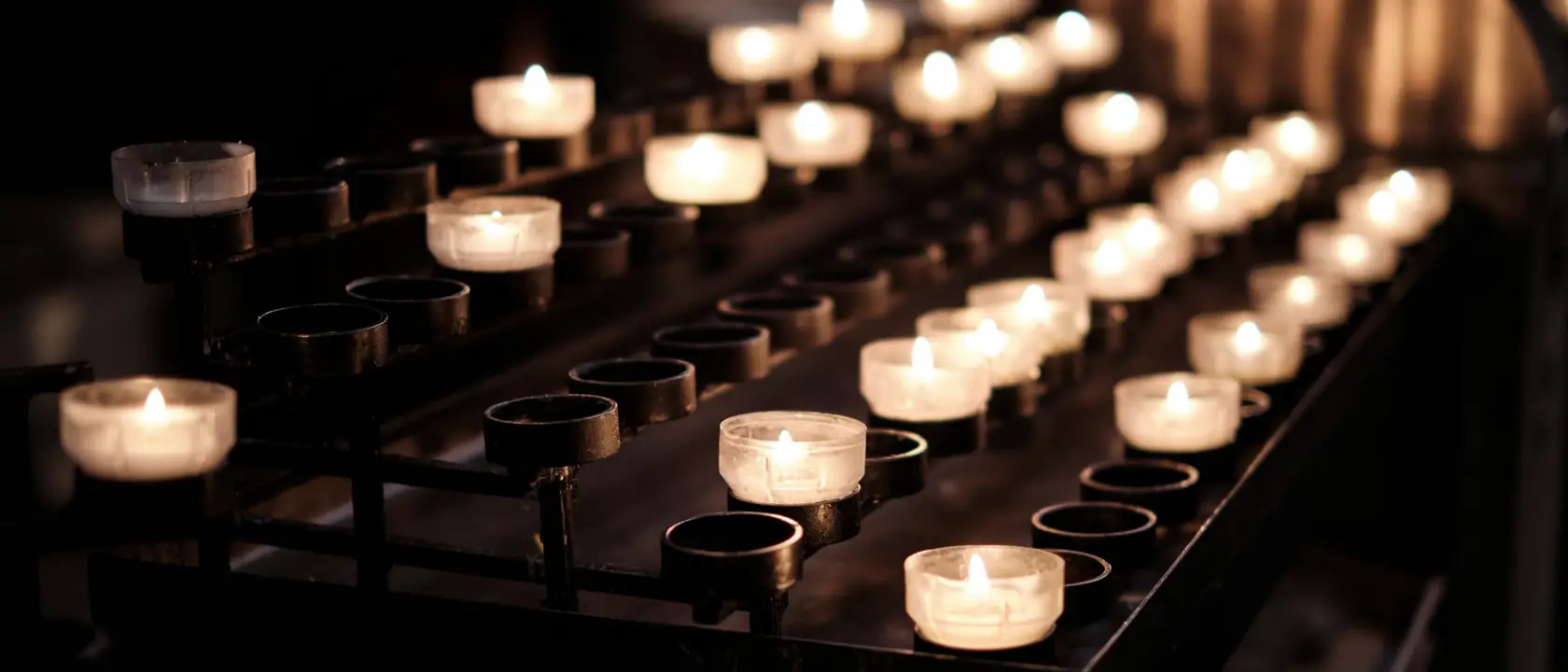
This page explains the Wave of Light and other candle-lighting memorial events that families and communities hold to remember children who have died. It is an information page, not a photo archive. The images on this site are stock photographs chosen for their mood. They do not show any real event, family or person.
To learn who writes this site, visit the About page. To send a question about an article or an event, use the Contact page.
What is a Wave of Light Ceremony?
A Wave of Light is a remembrance tradition in which people light candles at the same time, often in the evening, so that the light spreads across homes, towns and countries. Families use it to say the names of their children and to show that each child is still remembered. Some people light a single candle in a window, while others join a larger gathering in a church hall, a park or a community centre.
The idea is simple, and that simplicity is part of its strength. Nobody needs special equipment or a prepared speech. A candle, a few minutes of quiet and the presence of other people who understand the loss can be enough.
How Memorial Events Are Organized
Memorial events are usually planned by a small group of volunteers, a bereavement service, a faith community or a family. A typical event includes a welcome, a short reading or a moment of silence, the lighting of candles, and a chance to speak the names of children who have died. Some organisers provide a book of names, memory cards or a table where people can leave a message.
If you are thinking about organising an event yourself, plan the venue, the timing and the safety arrangements early. Check the rules about open flames with the venue owner. Think about families who may find the evening hard, and make sure there is a quiet room and a person they can speak to.
Capturing the Atmosphere: Photography Tips
Many families want to take pictures at a memorial event. Before you start, ask the organiser and the people present whether photographs are welcome. Some families prefer not to be photographed, and children should not appear in images without the consent of their parents.
When you do take photographs, focus on the candles, the hands that hold them and the quiet space around the group, rather than on individual faces. Use a steady hand and a low light setting, and avoid flash, which can dazzle people and disturb the mood of the evening.
Examples of Memorial Event Photos
This site does not publish photographs from real memorial events, because the people who attend them have not agreed to be shown online. If you want to see how other organisations present their events, look at the public pages those organisations publish themselves, and read their privacy statements first. Respectful examples usually show candles, light and empty space rather than close-up portraits.
Creating Your Own Photo Memorial
A personal photo memorial can be a printed album, a framed picture, a shared online folder or a small display at home. Choose photographs that show the child in ordinary moments as well as special ones. Add a few lines about the memories they connect to, and keep the display somewhere the family can see it when they choose to.
Before you share a memorial online, agree with the other family members what will be shown and who can see it. Some families keep their memorial private, and that is a good choice too.
Sharing Photos Respectfully
Photographs of children who have died are deeply personal. Ask before you share, and remove an image if the family asks you to. Do not add other people's names or addresses to a public post, and do not tag people in pictures without asking them first. When you share a photograph from a public event, check that it does not reveal faces, places or details that the organisers would rather keep private.
Resources for Event Organizers
Organisers can contact local bereavement services, hospice teams and faith leaders for advice on running an event that feels safe and welcoming. Local councils can explain the rules about public gatherings and open flames. Many organisers also find it helpful to write a short guide for attendees, covering what to expect, how long the event will last and where to find a quiet space if they need one.
Frequently Asked Questions
Can I use photos from memorial events on my own website?
Only if the people in the photographs, and the organisers, have agreed to it. For images of children, ask the parents first and keep a written record of their consent. Stock photographs with a clear licence are a safer choice for general use.
How do I find local Wave of Light events?
Start with local bereavement services, hospice teams, churches and community centres, which often publish details of gatherings in their area. Check each organiser's website or contact them directly to confirm the time and place before you travel.